What to do after you apply (a calm follow-up system)
The hardest part of job searching often isn't the apply click. It's the quiet afterwards: refreshing email, rereading the job ad, wondering whether to nudge, and feeling oddly guilty for both chasing and not chasing.
You need a system that answers a boring question well: what is the next sensible action for this opportunity, and when?
Not hustle. Not daily check-ins. Just a calm follow-up loop.
After you apply: capture, then leave it alone
Within the same day you apply:
- Log the role (company, title, date, source).
- Note the CV version you used.
- Set a next step with a date, usually a follow-up check, not "obsess daily."
- Move on to the next useful task (prep, network message, or rest).
If it isn't logged, it will live in your head. Heads make poor CRMs. Capture is useful later, not busywork.
Decide your default follow-up timing
Defaults beat mood. Pick timings you'll actually keep:
- No reply after apply: check in around 7-10 working days (sooner only if the ad states a tight deadline)
- After a recruiter screen: send any promised materials promptly; diary the stated next step
- After an interview: thank-you within 24 hours if it feels natural; then wait for their timeline unless they invited a nudge
- After a "we'll be in touch" stall: one polite follow-up after their stated window; if none was given, about a week is reasonable
- After your nudge goes unanswered: close or park the role rather than sending a third message into the void
One thoughtful follow-up beats three anxious ones. Hiring teams notice persistence; they also notice desperation.
A simple follow-up note shape
Keep it short:
- Reminder of the role and date you applied / spoke
- One line of continued interest
- Offer of anything useful (availability, portfolio link)
- Thanks, then stop
You're making it easy to reply, not writing a second cover letter. If you have a new relevant detail (a project shipped, a certification finished), one sentence is enough.
Use stages so nothing sits unanswered
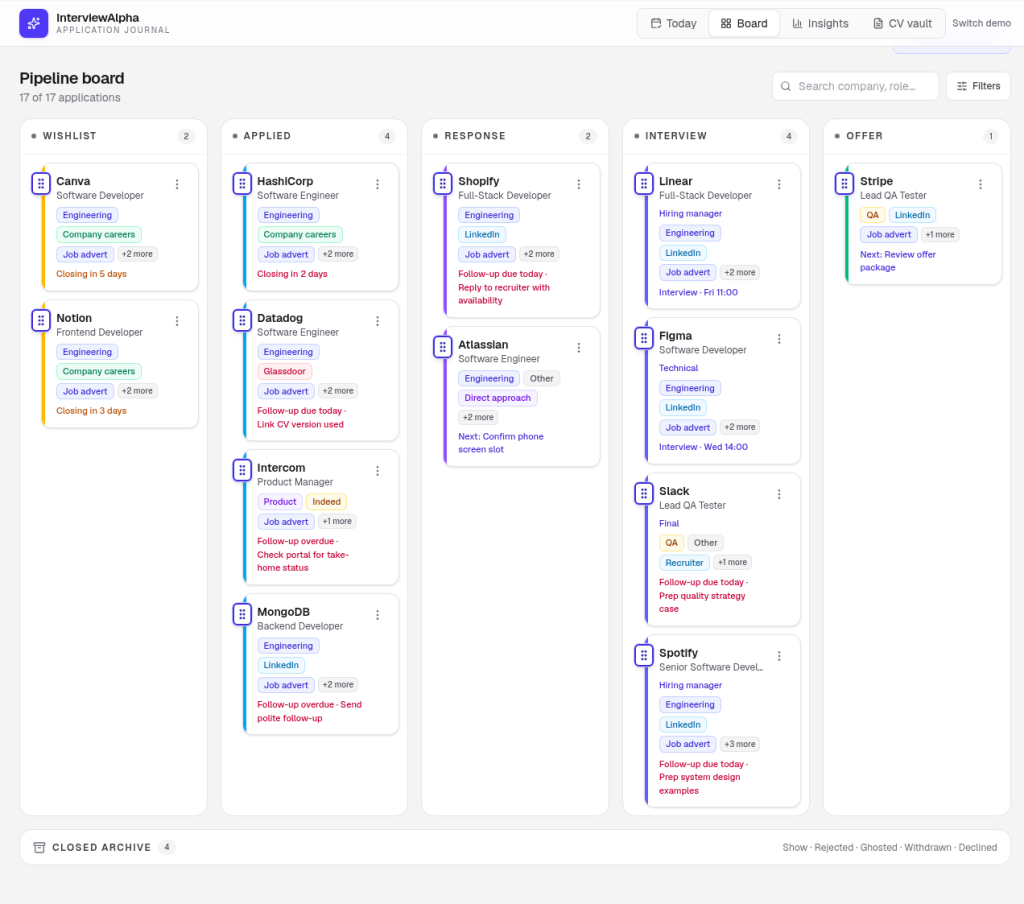
A Pipeline Board helps because stalled cards are visible. Typical post-apply motion:
- Applied → waiting for first signal
- Response → screening or email thread live
- Interview → active process
- Offer / closed → won, lost, or withdrawn
When a card sits in Applied past your follow-up date, the next step is the follow-up, not another rewrite of your entire CV (unless your version insights suggest a real pattern). Stages turn "I should do something" into "this card is due Thursday."
Separate "follow up" from "fix something"
Anxiety likes action. Useful action is specific:
| Feeling | Better next step |
|---|---|
| "Did they get it?" | One polite check-in after your default window |
| "I should apply more" | Apply to a shortlist that fits, quality over spray |
| "My CV must be wrong" | Check interview rate by version before rewriting everything |
| "I'm behind" | Do your 15-minute weekly review and pick three next steps |
| "They hated me" | Close the role if it's dead; don't reread the thread all evening |
A calm system protects you from thrashing. Follow-up is a scheduled behaviour, not a mood.
Notes worth keeping
When someone replies, capture lightly:
- Names and roles of people you spoke with
- What they asked / what you promised to send
- Timeline they mentioned
- Anything you'd forget under nerves (tech stack quirks, team size, hybrid days)
You don't need a novel. Three lines prevent awkward "remind me who you are" moments later, and they make interview prep faster when a process suddenly accelerates.
Where a dedicated workspace helps
Scattered inboxes hide follow-ups. A single board with stages, notes, and next steps keeps the loop visible: every opportunity moves, nothing sits unanswered by accident.
You can try that shape in the InterviewAlpha interactive demo, Pipeline Board, notes/stages, and CV context in one private-feeling workspace, no sign-up required. The current product framing emphasises local storage and control over deletion; don't expect cloud accounts or sync as live features yet. A fuller product is on the way; the demo is enough to see whether this rhythm suits you.
InterviewAlpha's pitch is calm organisation and knowing what to do next, not autofill spam or spray-apply tooling. Unlike noisier tools, the focus is organisation, next step, and a personal feedback loop.
A one-page follow-up policy (steal this)
- Log every application the day you send it.
- Set a follow-up date (7-10 working days unless told otherwise).
- Send at most one polite nudge per stage unless they invite more.
- Update the stage when reality changes.
- Close roles that are dead so your board stays trustworthy.
- Review live next steps once a week for 15 minutes.
- Never follow up more times than your policy allows just because the silence feels loud.
Waiting is easier when every open role has a date and a clear next action. Waiting is still waiting, but at least it's scheduled waiting, with a clear exit into either a conversation or a clean close.